
radio_button_checkedWhite House Photographers - May 1918As our nation and technology have evolved, so too has our news media, and the White House Press Corps is no exception. This picture captured a few of the White House Press pioneers. (and if you hover over their faces, you can find out who they were)Front PageStoriesJoe JohnsonHal HallJ.C. BrownAlley WestArthur LeonardTommy BaltzellFrank CullenGeorge DorseyChas SimonsHarry ValentineNewsboys - 12th Street NW
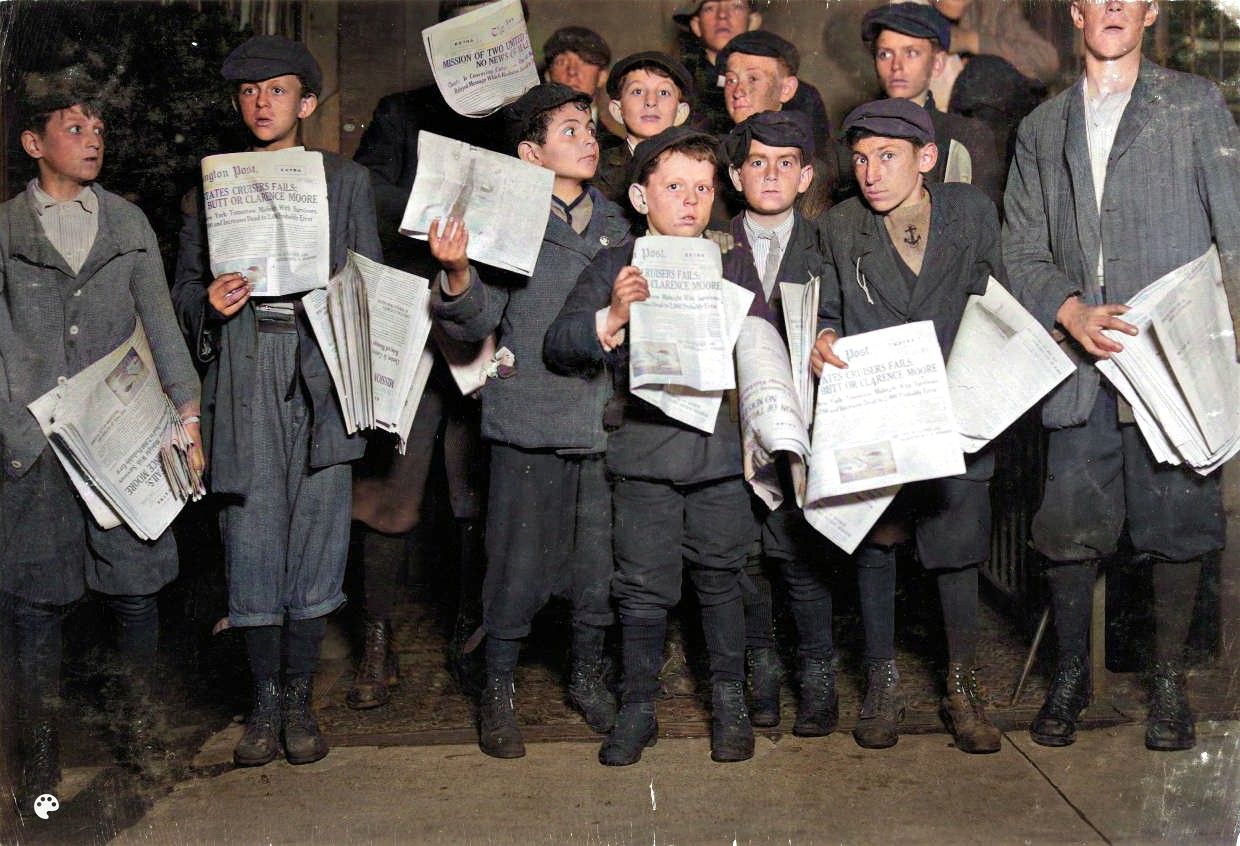
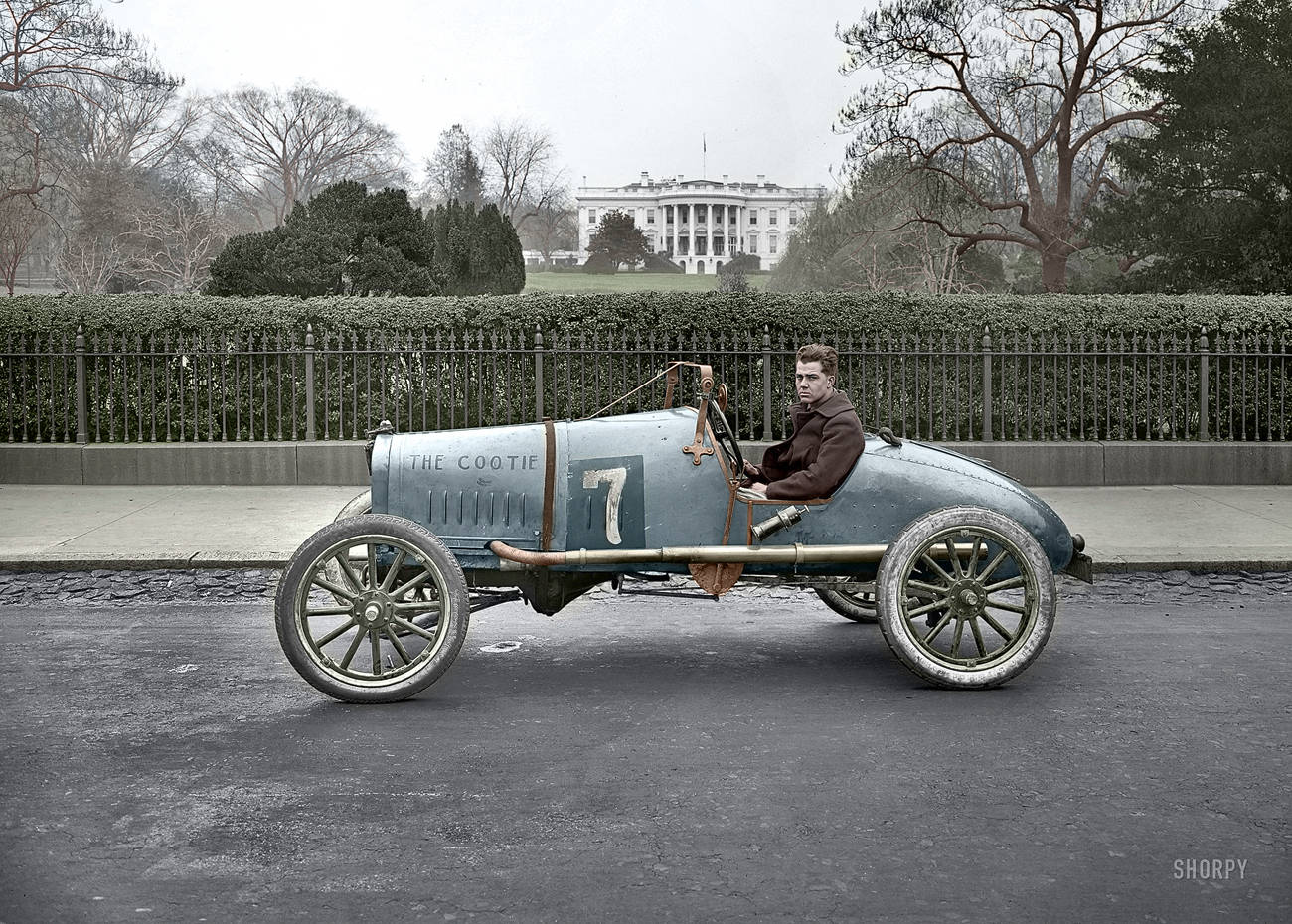
- April 17, 1912radio_button_checkedFront PageStoriesAfter midnight, and still selling extras. There were many of these groups of young news-boys selling very late these nights. Youngest boy in the group is Israel Spril 9 yrs. old, 314 I St., N.W., Washington D.C. Harry Shapiro, 11 yrs. old, 95 L St., N.W., Washington, D.C. Eugene Butler, 310 rear 13th St., N.W. The rest were a little older., 12th St. near G or C? Sundays.Location: Washington D.C., District of Columbia. District of Columbia United States Washington D.C. Washington D.C, 1912. Lewis Wickes Hine, photographer. Front PageStoriesradio_button_checked'The Cootie' This is Frederick Kopper, Jr. behind the wheel of his race car named “Cootie.” He served as a Captain in World War One. He liked to drive fast. On April 5, 1927 he learned of a quarter million dollar inheritance and went out to celebrate.Front PageStoriesradio_button_checkedThe Daredevil Jack Reynolds was 31 years old and he’d been doing this type of stunt for a long time. An acrobat and juggler, he was known by many names – Daredevil Johnny, the Climbing Wonder, and The Lizard, to Jughead.
The son of a steeplejack, Reynolds began performing at the age six in Buffalo, New York balancing on one foot from a flagpole 140 feet in the air. His first major stunt came at age 12 when he climbed up the side of the Old South Building in Boston in a hair-raising act, balancing atop four chairs and five tables on a plank projected over the side of the building. Jack Reynolds was one of those death-defying risk-takers who appeared to be fearless. In 1916, he sat on a chair tilted back and balanced on a broomstick suspended between two planks extended over Washington’s tallest building.Front PageStoriesradio_button_checkedCar SafetyLorem ipsum dolor sit amet, consectetur adipiscing elit. Mauris suscipit finibus aliquet. In sagittis sapien eget enim feugiat pulvinar. Mauris at enim nec nibh elementum aliquam. Nam in ligula arcu. Aliquam facilisis urna eget dolor maximus molestie. Maecenas ultricies leo lacus, eu dapibus eros porta non. In magna ipsum, facilisis eget sem eu, ultricies placerat lacus. Curabitur nec venenatis sem.
African Americans have been a significant part of Washington, DC's civic life and identity since the city was first declared the new national capital in 1791. African Americans were 25 percent of the population in 1800, and the majority of them were enslaved. By 1830, however, most were free people. Yet slavery remained. African Americans, of course, resisted slavery and injustice by organizing churches, private schools, aid societies, and businesses; by amassing wealth and property; by leaving the city; and by demanding abolition. In 1848, 77 free and enslaved adults and children unsuccessfully attempted the nation's largest single escape aboard the schooner Pearl. On April 16, 1862, Congress passed the District of Columbia Emancipation Act, making Washingtonians the first freed in the nation, nine months before President Abraham Lincoln issued the Emancipation Proclamation in January 1863. Congress had the authority to pass the DC Emancipation Act because it was granted the power to "exercise exclusive legislation" over the federal district by the U.S. Constitution. This federal oversight has been a source of conflict throughout Washington's history.During the Civil War (1861-1865) and Reconstruction (1865-1877), more than 25,000 African Americans moved to Washington. The fact that it was mostly pro-Union and the nation's capital made it a popular destination. Through the passage of Congress's Reconstruction Act of 1867, the city's African American men gained the right to vote three years before the passage of the 15th amendment gave all men the right to vote. (Women gained the right to vote in 1920.) The first black municipal office holder was elected in 1868. When Washington briefly became a federal territory in 1871, African American men continued to make important decisions for the city. Lewis H. Douglass introduced the 1872 law making segregation in public accommodations illegal. But in 1874, in part because of growing black political power, the territorial government was replaced by three presidentially appointed commissioners. This system survived until the civil rights movement of the 1960s brought a measure of self-government.
By 1900 Washington had the largest percentage of African Americans of any city in the nation. Many came because of opportunities for federal jobs. Others were attracted to the myriad educational institutions. Howard University, founded in 1867, was a magnet for professors and students and would become the "capstone of Negro education" by 1930. The Preparatory School for Colored Youth, the city's first public high school, attracted college-bound students and teachers, many with advanced degrees. (Founded in 1870, the school became renowned as M Street High School, and later, Dunbar High School.) As far back as 1814, churches had operated and supported schools and housed literary and historical societies that promoted critical thinking, reading, lecturing, and social justice. African Americans also created hundreds of black-owned businesses and numerous business districts.
At the dawn of the 20th century, African Americans had created a cultural and intellectual capital. Washington had relatively few "Jim Crow" laws. However, segregation and racism were endemic. The few existing laws mandated segregation in the public schools and recreation facilities but not in the streetcars and public libraries. African Americans, therefore, reacted strongly to President Wilson's (1913-1921) institution of segregation in all of the federal government agencies. Clashes between African Americans and European Americans reached a fever pitch during the July 1919 race riot, when women and men fought back against violent whites, giving another meaning to the term "New Negro," a term usually associated with the cultural renaissance of the 1920s and 1930s. During the Great Depression (1929-1939) and World War II (1939-1945), the early civil rights movement gained ground.
In 1933, the same year that President Franklin Roosevelt (1933-1945) began to end segregation in the federal government, the young black men of the New Negro Alliance instituted "Don't Buy Where You Can't Work" campaigns against racist hiring practices in white-owned stores in predominantly black neighborhoods. The Washington chapter of the National Negro Congress also organized against police brutality and segregation in recreation beginning in 1936. The "Double V" effort - Victory Abroad, Victory at Home - increased civil rights activity. In 1943 Howard University law student Pauli Murray led coeds in a sit-in at the Little Palace cafeteria, a white-trade-only business near 14th and U streets, NW, an area that was largely African American. In 1948 the Supreme Court declared racially restrictive housing covenants were unconstitutional in the local Hurd v. Hodge case. Beginning in 1949 Mary Church Terrell led a multiracial effort to end segregation in public accommodations through pickets, boycotts, and legal action.
Four years later, in District of Columbia v. John R. Thompson Co., the U.S. Supreme Court ruled that segregation in Washington was unconstitutional based on the 1872 law passed during Reconstruction but long forgotten. In 1954 a local case, Bolling v. Sharpe, was part of the landmark Brown v. Board of Education Supreme Court decision, which declared separate education was unconstitutional. In 1957 Washington's African American population surpassed the 50 percent mark, making it the first predominantly black major city in the nation, and leading a nationwide trend. The 1963 March on Washington for Jobs and Freedom brought more than 250,000 people to the Lincoln Memorial. Its success was helped by the support and contributions of local churches and organizations. The assassination of Rev. Martin Luther King, Jr., on April 4, 1968, triggered immediate and intense reactions throughout the nation and the city.
During the 1968 riots, when buildings were burned and destroyed, many African Americans rebelled against continued racism, injustice, and the federal government's abandonment of the city. Even before Dr. King's assassination, demands for justice undoubtedly helped push the federal government to take first steps towards "home rule" by appointing Walter Washington as mayor in 1967. In 1974 residents chose Washington as the city's first elected black mayor and the first mayor of the 20th century.
By 1975 African Americans were politically and culturally leading the city with more than 70 percent of the population. The Black Arts, Black Power, Women's, and Statehood movements flowered here. Indeed, Marion Barry, who succeeded Washington as mayor, began his public life here as a leader of local justice movements. There were independent think tanks, schools, bookstores, and repertory companies. Go-go (DC's home-grown version of funk) as well as jazz, blues, and salsa, resonated from clubs, parks, recreation centers, and car radios. With the uniting of political activism and creativity, African Americans were transforming the city once again.
*Reprinted from Marya Annette McQuirter, African American Heritage Trail, Washington, DC (Washington: Cultural Tourism DC, 2003).
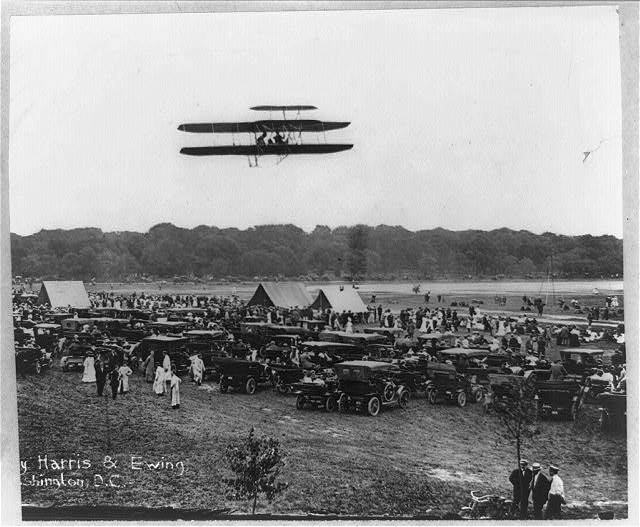
The 1909 Wright Military Flyer is the world's first military airplane. In 1908, the U.S. Army Signal Corps sought competitive bids for a two-seat observation aircraft. Winning designs had to meet a number specified performance standards. Flight trials with the Wrights' entry began at Fort Myer, Virginia, on September 3, 1908. After several days of successful flights, tragedy occurred on September 17, when Orville Wright crashed with Lt. Thomas E. Selfridge, the Army's observer, as his passenger. Orville survived with severe injuries, but Selfridge was killed, becoming the first fatality in a powered airplane.
On June 3, 1909, the Wrights returned to Fort Myer with a new airplane to complete the trials begun in 1908. Satisfying all requirements, the Army purchased the airplane for $30,000, and conducted flight training with it at nearby College Park, Maryland, and at Fort Sam Houston, in San Antonio, Texas, in 1910. It was given to the Smithsonian in 1911.
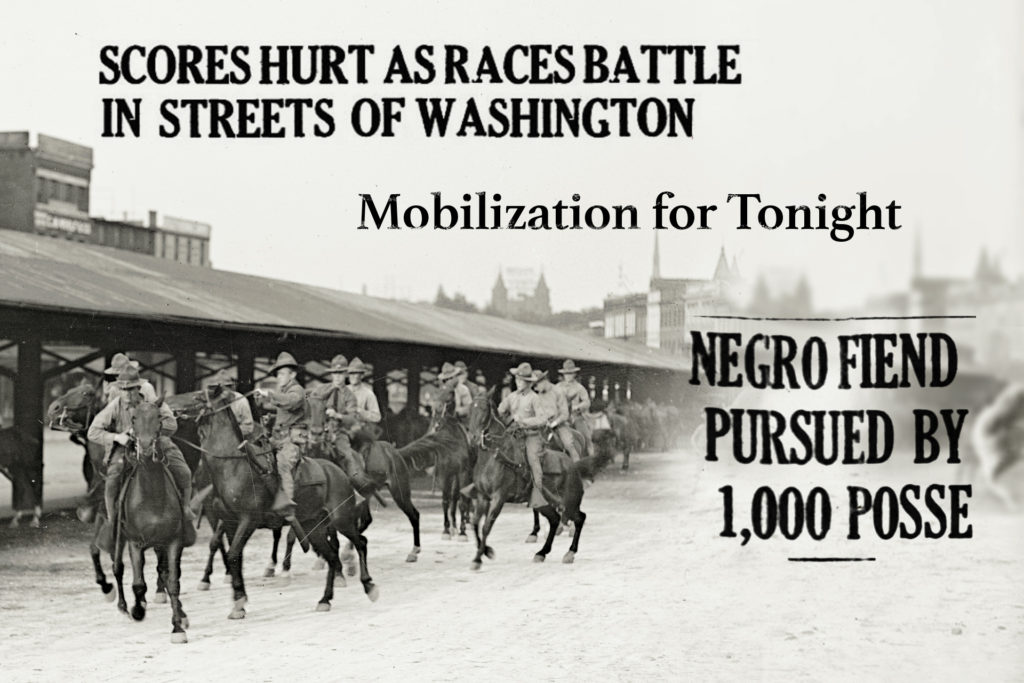
The nation’s capital was at war with itself. On a muggy Saturday night in July 1919, white veterans were drinking in the bars clustered downtown when their banter gave birth to a rumor. The Metropolitan Police Department had arrested, questioned, and released a black man suspected of sexually assaulting a white woman—and not just any white woman, either, but the wife of a Navy man. The story snaked through the packed saloons and pool halls.
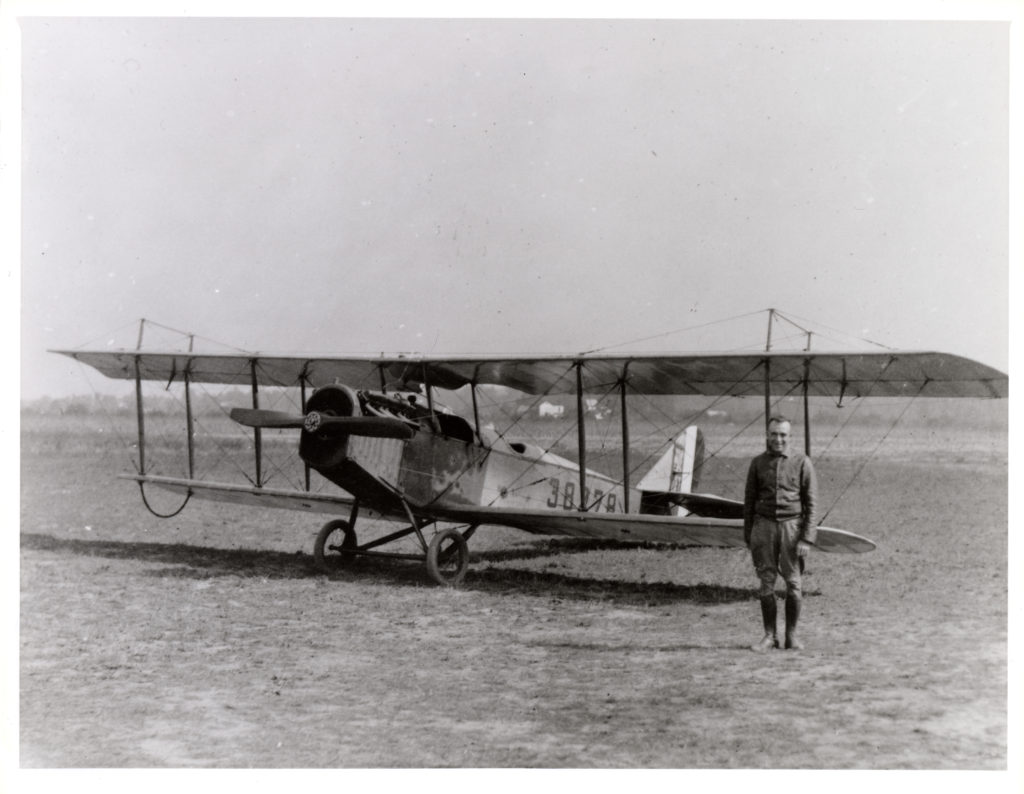
When airmail began in 1918, airplanes were still a relatively new invention. Pilots flew in open cockpits in all kinds of weather, in planes later described as "a nervous collection of whistling wires, of linen stretched over wooden ribs, all attached to a wheezy, water-cooled engine." A 1918 article titled "Practical Hints on Flying" advised pilots to "never forget that the engine may stop, and at all times keep this in mind." Pilots followed landmarks on the ground; in the fog, they flew blind. Unpredictable weather, unreliable equipment, and inexperience led to frequent crashes; 34 airmail pilots died from 1918 through 1927. Gradually, through trial and error and personal sacrifice, U.S. Air Mail Service employees developed reliable navigation aids and safety features for planes and pilots. They demonstrated that flight schedules could be safely maintained in all kinds of weather.
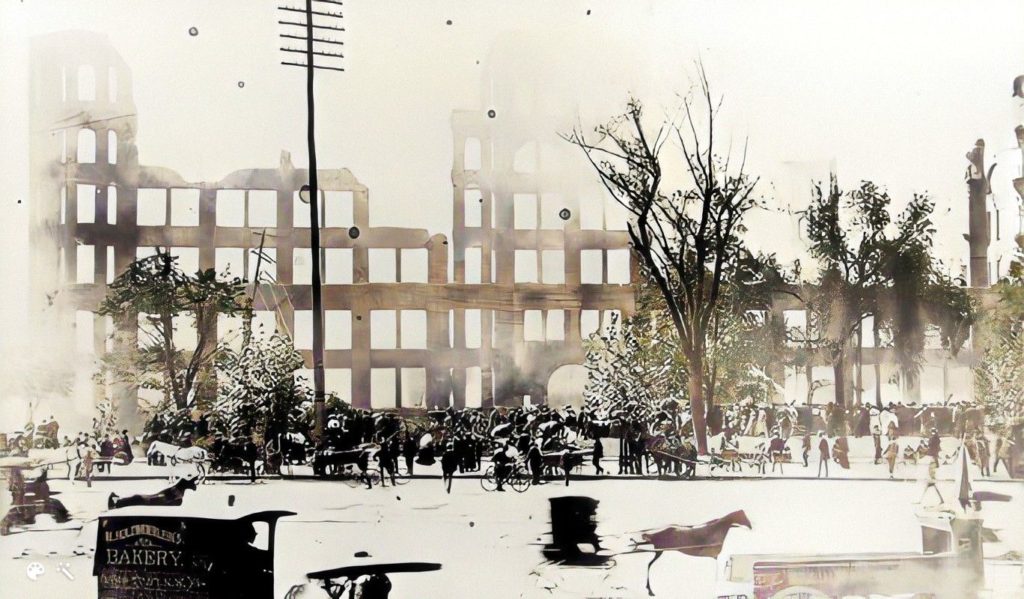
It was one of Washington's most spectacular fires. It happened on September 29, 1897, at the Capital Traction Company's powerhouse at 14th and E Northwest. It is now the site of the John Wilson Building, the Council of the District of Columbia. The company replaced the cable cars it served with an electric system, using horses in the interim. The electric wire for the cars was placed in the old cable system's underground conduit. The 14th Street branch switched to electric power on February 27, 1898, the Pennsylvania Avenue division on April 20, 1898 (March 20 west of the Capitol), and the 7th Street branch on May 26, 1898. The place where cars changed between Capital Traction and Metropolitan was initially located at U and 18th Streets. It was moved just east of the bridge over Rock Creek - to the Calvert Street Loop - in the spring of 1899 when the conduit system was changed to the more standard and less expensive contact shoe. The old line on Florida Avenue between 18th and Connecticut was discontinued that year and the track removed.
On September 29, 1897, the Capital Traction Company's powerhouse at 14th and E NW burned down - and almost took downtown DC with it. Today, the location is taken by the John Wilson Building, the Council of the District of Columbia. After the conflagration, the company replaced the cable cars it served with an electric system, using horses in the interim. The electric wire for the cars was placed in the old cable system's underground conduit. The 14th Street branch switched to electric power on February 27, 1898, the Pennsylvania Avenue division on April 20, 1898 (March 20 west of the Capitol),[5] and the 7th Street branch on May 26, 1898. The place where cars changed between Capital Traction and Metropolitan was initially located at U and 18th Streets. It was moved to just east of the bridge over Rock Creek - to the Calvert Street Loop - in the spring of 1899 when the conduit system was changed to the more standard and less expensive contact shoe.[6] The old line on Florida Avenue between 18th and Connecticut was discontinued that year and the track removed.----
On yesterday's date in 1897, fire destroyed the Capital Traction Powerhouse at 14th/Penn.
All that remained was a sign reading "Absolutely Fireproof."
Less known: "Capital Traction Powerhouse" was an in-house Council funk band in the 70s.
In 1908, our building was built t/here.
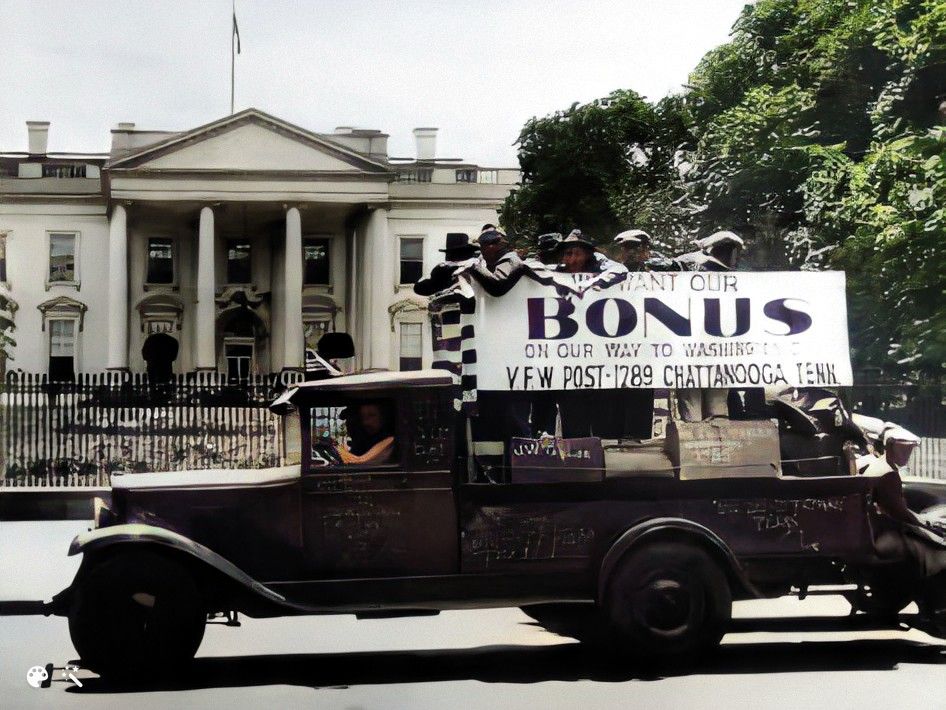
Throughout its history, Washington, DC has been the destination of demonstrators seeking to promote a wide variety of causes. The January 6th attack on the capitol is just the latest example.
In March of 1932, another large group of protestor/patriots came demand the Bonus pay they'd earned during World War One.
After victory in World War I, the US government promised in 1924 that servicemen would receive a bonus for their service if they could wait until 1945.
In March of 1932, another large group of protestors came to demand the Bonus pay they'd earned during World War One.
The Great Depression was on, and the U.S. Treasury was strapped for cash. By 1932, the Depression was dragging on, with no end in sight.
Out of sheer desperation, some of the veterans decided to march on Washington to ask for the bonus right away.
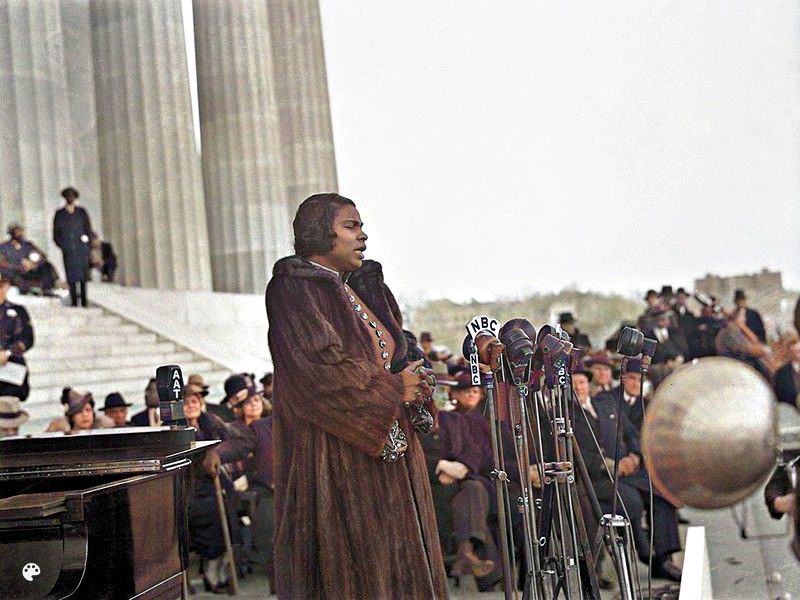
It was Easter Sunday on April 9, 1939. One of the world’s greatest singers, contralto Marian Anderson, had been denied permission to sing at Constitution Hall, owned by the Daughters of the American Revolution, because of her race.
First Lady Eleanor Roosevelt quit the D.A.R. over the racist action and helped change the venue to the Lincoln Memorial. The incident placed the respected contralto into a spotlight unusual for a classical musician of the time.
75,000 people were in the audience that day. She was terrified. Later, she wrote: “I could not run away from this situation. If I had anything to offer, I would have to do so now.” And some one-hundred thousand Washingtonians joined Ms. Roosevelt in giving the stuffy organization the finger.
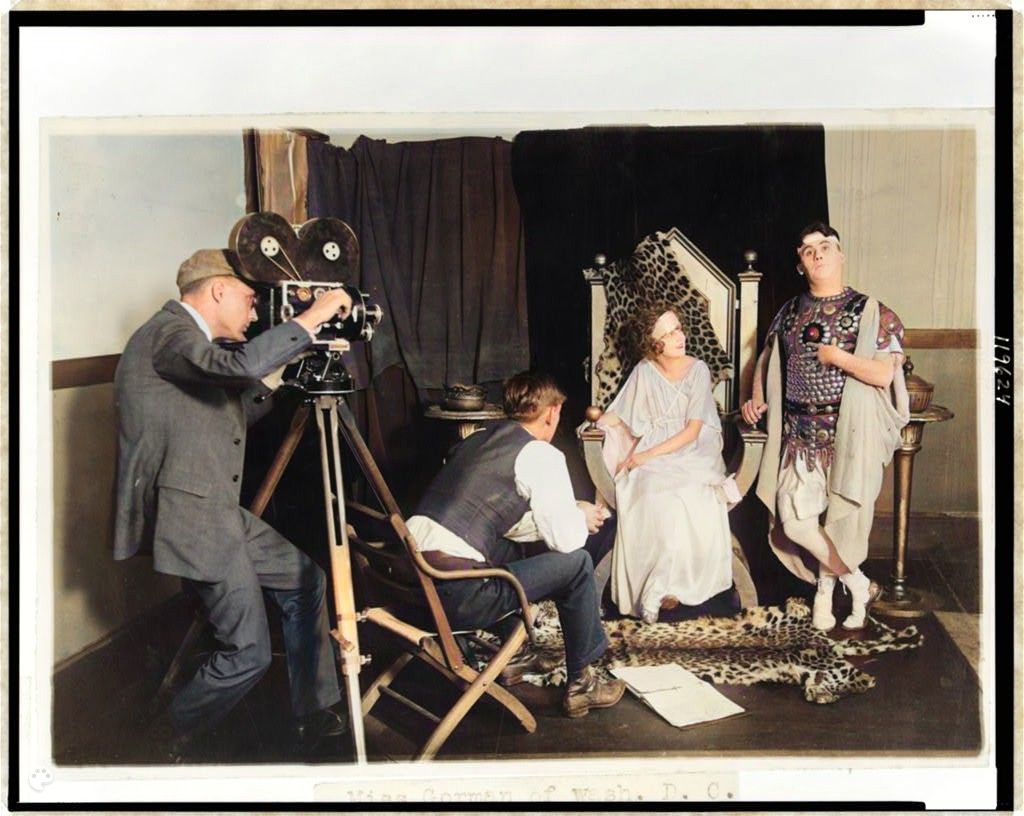
Margaret Gorman was a junior at Western High School in Washington, D.C. when her photo was entered into a popularity contest at the Washington Herald. She was chosen as “Miss District of Columbia” in 1921 at age 16 on account of her athletic ability, past accomplishments, and outgoing personality. As a result of that victory, she was invited to join the Second Annual Atlantic City Pageant held on September 8, 1921, as an honored guest. There she was invited to join a new event: the “Inter-City Beauty” Contest. She won the titles “Inter-City Beauty, Amateur” and “The Most Beautiful Bathing Girl in America” after competing in the Bather’s Revue. She won the grand prize, the Golden Mermaid trophy. She was expected to defend her positions the next year, but someone else[who?] had attained the title of “Miss Washington, D.C.,” so she was instead crowned as “Miss America.” She is the only Miss America to receive her crown at the end of the year.
Gorman was the lightest Miss America at 108 pounds until 1949, when Jacque Mercer of Phoenix, Arizona, weighed in at 106 and won the title.
Gorman later said: “I never cared to be Miss America. It wasn’t my idea. I am so bored by it all. I really want to forget the whole thing.” She still owned the sea green chiffon and sequined dress that she wore in the 1922 competition.